
20 U.S. Agriculture Facts and Statistics for 2027
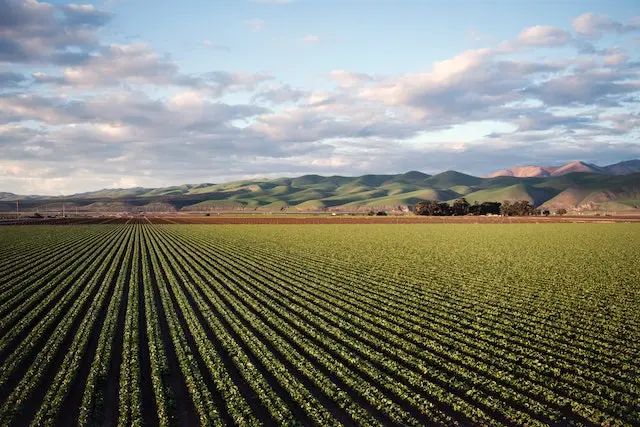
The United States is a major player in global agriculture, with a wide range of crops and livestock that feed and fuel the country and the world.
These 20 facts come from the latest official numbers: the 2022 Census of Agriculture (the most recent; the next census counts 2027), USDA’s latest farm economy, trade, and crop reports, and Department of Labor data. Each fact says which year it describes. They show where farming stands and where the jobs and trends are heading.
View all agriculture jobs currently posted and looking for applicants
1. There Are About 1.9 Million Farms
The 2022 Census of Agriculture counted 1,900,487 farms, down 6.9% from 2017. Over the 20 years from 2002 to 2022, the number of farms fell 11%. USDA estimated 1.88 million farms in 2024.
Source: USDA National Agricultural Statistics Service, 2022 Census of Agriculture; USDA Economic Research Service, Farming and Farm Income
2. Farms Cover 39% of U.S. Land
Farms covered 880.1 million acres in 2022, or 39% of all land in the United States. That was 20.1 million fewer acres than in 2017.
Source: USDA National Agricultural Statistics Service, 2022 Census of Agriculture
3. Farms Are Getting Bigger
The average farm grew from 441 acres in 2017 to 463 acres in 2022. Between those years, the only size group that gained farms was the largest: 5,000 acres or more.
Source: USDA National Agricultural Statistics Service, 2022 Census of Agriculture
4. A Few Large Farms Hold Most of the Land
In 2022, the largest 2% of farms (5,000 acres or more) operated 42% of all farmland. At the other end, 42% of farms had fewer than 50 acres and together held just 2% of farmland.
Source: USDA National Agricultural Statistics Service, 2022 Census of Agriculture
5. Texas Has the Most Farms by Far
With 230,662 farms in 2022, Texas had more than twice as many as the next state, Missouri (87,887). Iowa, Ohio, and Illinois round out the top five.
Source: USDA National Agricultural Statistics Service, 2022 Census of Agriculture
6. Nearly All Farms Are Family Farms
Family farms made up 97% of U.S. farms in 2024. Small family farms (under $350,000 in gross cash farm income) were 86% of all farms, while large family farms with $1 million or more in income were about 5% of farms but produced about half of the value of U.S. farm production.
Source: USDA Economic Research Service, Farming and Farm Income
7. The Average Farmer Is 58
The average age of U.S. farm producers was 58.1 in 2022, up 0.6 years from 2017. The number of producers 65 and older grew 12%, while producers aged 35 to 64 fell 9%. That aging workforce is one reason farms need new workers and managers.
Source: USDA National Agricultural Statistics Service, 2022 Census of Agriculture
8. More Than a Million Farmers Are New to It
Just over 1 million of the 3.4 million U.S. producers in 2022 were beginning farmers, with 10 or fewer years of experience. Their average age was 47.1.
Source: USDA National Agricultural Statistics Service, 2022 Census of Agriculture
9. More Than a Third of Farmers Are Women
Women made up 36% of the 3.4 million U.S. farm producers in 2022.
Source: USDA National Agricultural Statistics Service, 2022 Census of Agriculture
10. Hundreds of Thousands of Farmers Are Veterans
In 2022, 305,753 producers, or 9% of the total, had served or were serving in the U.S. military. For more than half of them, farming was their main job.
Source: USDA National Agricultural Statistics Service, 2022 Census of Agriculture
11. Much of Farmland Is Rented
In 2022, 39% of U.S. farmland was rented from others. Farms run by part owners, who own some land and rent more, were under a quarter of all farms but operated 56% of farmland.
Source: USDA National Agricultural Statistics Service, 2022 Census of Agriculture
12. Cattle and Dairy Use the Most Land
Farms specializing in cattle and dairy used 41% of U.S. farmland in 2022, and farms specializing in oilseeds and grains used another 32%. In all, 568,972 farms specialized in cattle and dairy.
Source: USDA National Agricultural Statistics Service, 2022 Census of Agriculture
13. The 2025 Corn Crop Set a Record
U.S. farmers harvested a record 17.0 billion bushels of corn in 2025, with a record average yield of 186.5 bushels per acre.
Source: USDA National Agricultural Statistics Service, Crop Production 2025 Summary (January 2026)
14. Soybean Yields Hit a Record Too
Soybean growers averaged a record 53 bushels per acre in 2025. Total production was 4.26 billion bushels, the seventh-largest crop on record.
Source: USDA National Agricultural Statistics Service, Crop Production 2025 Summary (January 2026)
15. The Cattle Herd Is Small
There were 86.2 million cattle and calves on U.S. farms on January 1, 2026, including 27.6 million beef cows, down 1% from a year earlier.
Source: USDA National Agricultural Statistics Service, Cattle report (January 2026)
16. Agriculture and Food Are 5.5% of the Economy
Agriculture, food, and related industries contributed about $1.537 trillion to U.S. gross domestic product in 2023, a 5.5% share. The output of farms themselves was $222.3 billion, about 0.8% of GDP.
Source: USDA Economic Research Service, Ag and Food Sectors and the Economy
17. Farm Income Is Forecast to Dip in 2026
USDA forecasts net farm income at $158.4 billion for 2026, down $4.3 billion (2.6%) from 2025 before adjusting for inflation.
Source: USDA Economic Research Service, Farm Income Forecast (September 2026)
18. The U.S. Exported $171 Billion in Farm Products
The United States exported $171 billion in agricultural products in 2025 and imported $212 billion, a farm trade deficit of $41 billion. Mexico, Canada, the European Union, Japan, and South Korea bought 56% of U.S. farm exports.
Source: USDA Economic Research Service, Agricultural Trade
19. Farmers Get About 13 Cents of Each Food Dollar
Of every dollar U.S. consumers spent on domestically produced food in 2025, farms received 12.6 cents. The other 87.4 cents went to processing, packaging, transportation, retail, and food service. For food bought at grocery stores, the farm share was 18.9 cents.
Source: USDA Economic Research Service, Food Dollar Series
20. Farms Lean on Guest Workers
The U.S. Department of Labor certified 398,258 H-2A temporary agricultural worker positions in fiscal year 2025, and H-2A applications rose 9.3% from the year before. Florida, Georgia, California, Washington, and North Carolina used the program most. Most of these jobs (82%) were crop, nursery, and greenhouse farmworkers.
Source: U.S. Department of Labor, Office of Foreign Labor Certification, H-2A Selected Statistics, FY 2025
Conclusion
U.S. agriculture is producing record crops on fewer, larger farms, run by an aging but changing group of farmers. That combination means steady demand for skilled workers, managers, and specialists who can help farms run efficiently. If you’re looking for work in agriculture, see the jobs open now or read our guides to agriculture careers.